
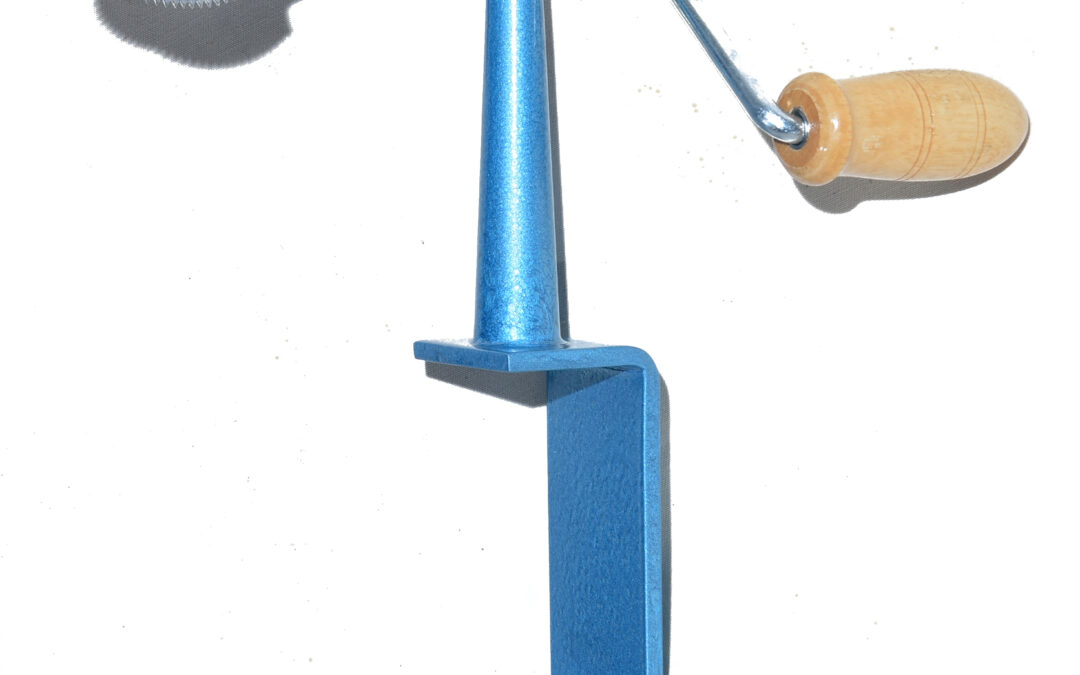
The phrase “Turns this way and that; eats all the coconut” (“වක්ක වකයි වක දෙවකයි වත්තේම පොල් ඔක්කොම කයි” Wakka wakai Waka Devakai waththema pol okkoma kai) is actually a Sinhala choice.
The answer is: The Coconut Scraper (Coconut Grater)
Why “Turns this way and that; eats all the coconut” (Wakka wakai Waka Devakai waththema pol okkoma kai)?
-
When you scrape a coconut, the blade turns one way and then the other way (“වක්ක වකයි, වක දෙවකයි”).
-
No matter which way it turns, all the coconut inside gets scraped out (“වත්තේම පොල් ඔක්කොම කයි”).
What is a Coconut Scraper?
A coconut scraper is a kitchen tool used to grate the white flesh inside a coconut. Once the hard shell is broken, the scraper shaves fine pieces from the kernel, which are then used for cooking, making coconut milk, oil, or sweets.
Types of Coconut Scrapers
-
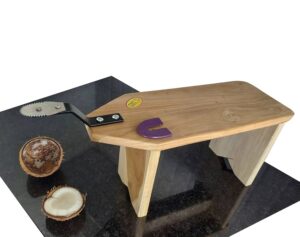
Traditional Manual Scraper (Bench Type)
-
A small metal blade with serrated teeth fixed to a wooden or metal bench.
-
The user sits on the bench, holds the half coconut, and scrapes it against the blade by hand.
-
Very common in older Sri Lankan households.
-
-
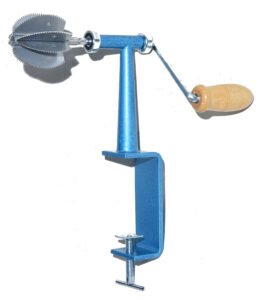
Rotary Hand-Crank Scraper
-
Has a rotating serrated disk operated by a hand crank.
-
The coconut half is pressed against the spinning blade to grate quickly.
-
Easier than the bench type, but still manual.
-
-
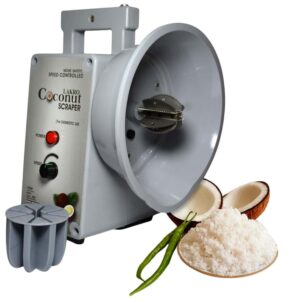
Electric Coconut Scraper
-
Modern version powered by electricity.
-
A rotating blade scrapes the coconut flesh rapidly when pressed against it.
-
Saves time, especially in restaurants and large households.
-
How It Works
-
The coconut is broken into halves.
-
Each half is held firmly against the blade (manual or electric).
-
By scraping or rotating, the white kernel gets grated into fine shavings.
-
The grated coconut is then used directly in curries, sambols (like pol sambol), or squeezed with water to extract coconut milk
Cultural Significance
-
In Sri Lanka, the coconut scraper is as common as a knife or spoon in the kitchen.
-
Coconut is part of almost every meal — for example:
-
Pol sambol (coconut with chili, onion, lime).
-
Coconut milk curries.
-
Sweetmeats like kokis or aluwa.
-
-
Because of this, the scraper is considered a must-have tool.
Pros & Cons
Pros:
-
Fresh coconut taste.
-
Essential for authentic Sri Lankan cooking.
-
Simple and durable.
Cons:
-
Manual scrapers need effort.
-
Can be dangerous if fingers slip.
-
Electric ones are expensive compared to manual scrapers.
The coconut scraper is an everyday kitchen tool, deeply tied to Sri Lankan cooking traditions — so much so that riddles and proverbs (like the one you shared) are made about it.
Recent Comments