
| Sinhala Line | English Meaning |
|---|---|
| තේක්ක නැන්දේ තේක්ක නැන්දේ | Aunt Teak, Aunt Teak |
| තේක්ක මාමා කෝයි | Where is Uncle Teak? |
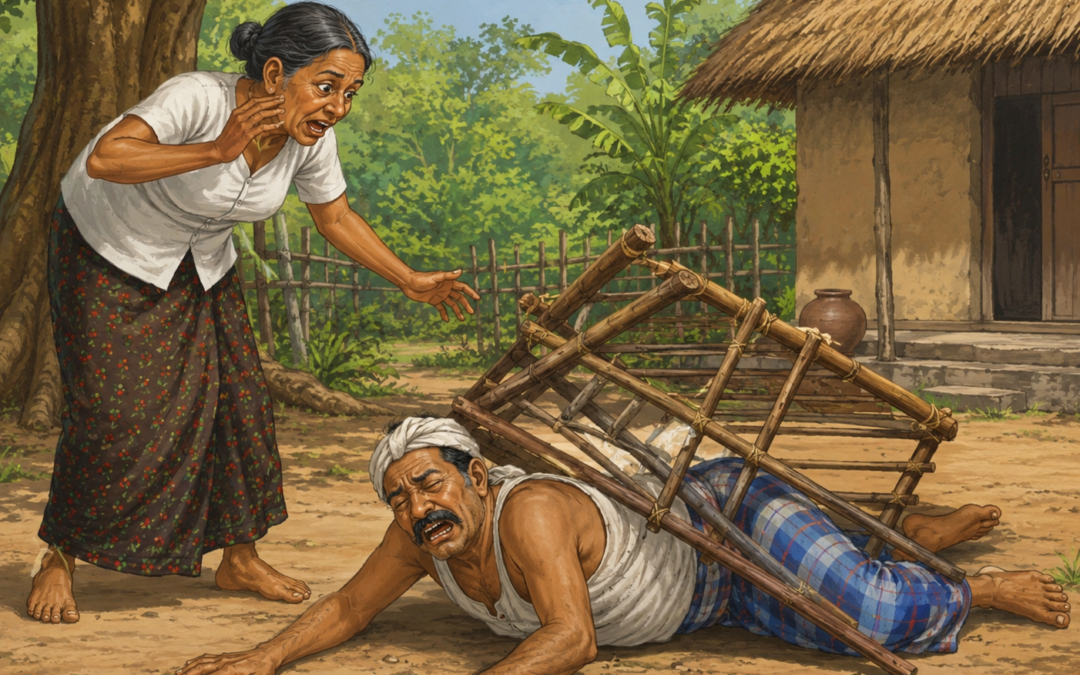
| අටුවෙන් වැටිලා කොන්ද කැඩිලා | He fell from the attic and broke his back |
| කුල්ලෙන් වහලා දොයි | Covered with a winnowing basket, he lies asleep |
Aunt Teak, Aunt Teak – Meaning and Cultural Context
This playful Raban Padaya (traditional Sinhala folk verse) is commonly sung during Sinhala and Tamil New Year celebrations while groups of women gather around the Raban (a traditional Sri Lankan drum) and perform rhythmic songs and games.
Like many Raban verses, the lyrics are not intended to tell a realistic story. Instead, they use:
- Humorous imagery
- Everyday village objects
- Exaggerated situations
- Rhythmic word patterns
to entertain participants and maintain the beat of the drum.
In this verse, “Teak Aunt” (තේක්ක නැන්දා (thekka nande)) is looking for “Teak Uncle” (තේක්ක මාමා). The humorous response is that he has fallen from the attic (අටුව), injured himself, and is now lying down covered with a winnowing basket (කුල්ල), a common household item in traditional Sri Lankan homes.
The charm of the song lies in its absurdity and playful storytelling rather than any deeper meaning.
Traditional Objects Mentioned in Thekka Nande
🏠 Attic (අටුව)
A storage space found in traditional village houses where grains, tools, and household items were kept.
🧺 Winnowing Basket (කුල්ල)
A woven basket used to separate grain from chaff. It is a familiar object in traditional Sri Lankan agriculture and village life.
🌳 Teak (තේක්ක)
Teak is a valuable hardwood tree found throughout South Asia. In this verse, “Teak Aunt” and “Teak Uncle” are humorous character names rather than references to actual trees.
Educational Note
This verse is an excellent example of how Sinhala folk poetry combines:
- Rhythm and repetition
- Humor and imagination
- Village life references
- Community participation
Although simple in structure, such Raban Padaya have helped preserve Sri Lankan oral traditions for centuries and continue to be enjoyed during festive occasions today.
Recent Comments