Tambourine Terms (Raban Pada)
| Sinhala Line |
English Meaning |
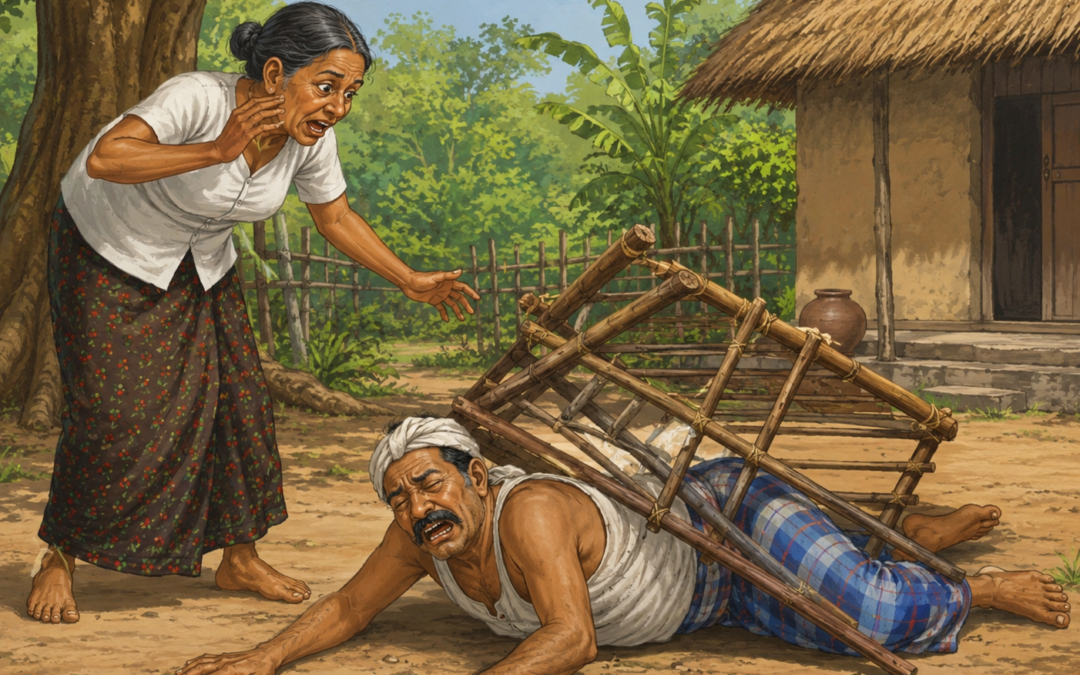
| තේක්ක නැන්දේ තේක්ක නැන්දේ |
Aunt Teak, Aunt Teak |
| තේක්ක මාමා කෝයි |
Where is Uncle Teak? |
| අටුවෙන් වැටිලා කොන්ද කැඩිලා |
He fell from the attic and broke his back |
| කුල්ලෙන් වහලා දොයි |
Covered with a winnowing basket, he lies asleep |
Aunt Teak, Aunt Teak – Meaning and Cultural Context
This playful Raban Padaya (traditional Sinhala folk verse) is commonly sung during Sinhala and Tamil New Year celebrations while groups of women gather around the Raban (a traditional Sri Lankan drum) and perform rhythmic songs and games.
Like many Raban verses, the lyrics are not intended to tell a realistic story. Instead, they use:
- Humorous imagery
- Everyday village objects
- Exaggerated situations
- Rhythmic word patterns
to entertain participants and maintain the beat of the drum.
In this verse, “Teak Aunt” (තේක්ක නැන්දා (thekka nande)) is looking for “Teak Uncle” (තේක්ක මාමා). The humorous response is that he has fallen from the attic (අටුව), injured himself, and is now lying down covered with a winnowing basket (කුල්ල), a common household item in traditional Sri Lankan homes.
The charm of the song lies in its absurdity and playful storytelling rather than any deeper meaning.
Traditional Objects Mentioned in Thekka Nande
🏠 Attic (අටුව)
A storage space found in traditional village houses where grains, tools, and household items were kept.
🧺 Winnowing Basket (කුල්ල)
A woven basket used to separate grain from chaff. It is a familiar object in traditional Sri Lankan agriculture and village life.
🌳 Teak (තේක්ක)
Teak is a valuable hardwood tree found throughout South Asia. In this verse, “Teak Aunt” and “Teak Uncle” are humorous character names rather than references to actual trees.
Educational Note
This verse is an excellent example of how Sinhala folk poetry combines:
- Rhythm and repetition
- Humor and imagination
- Village life references
- Community participation
Although simple in structure, such Raban Padaya have helped preserve Sri Lankan oral traditions for centuries and continue to be enjoyed during festive occasions today.
Tambourine Terms (Raban Pada)
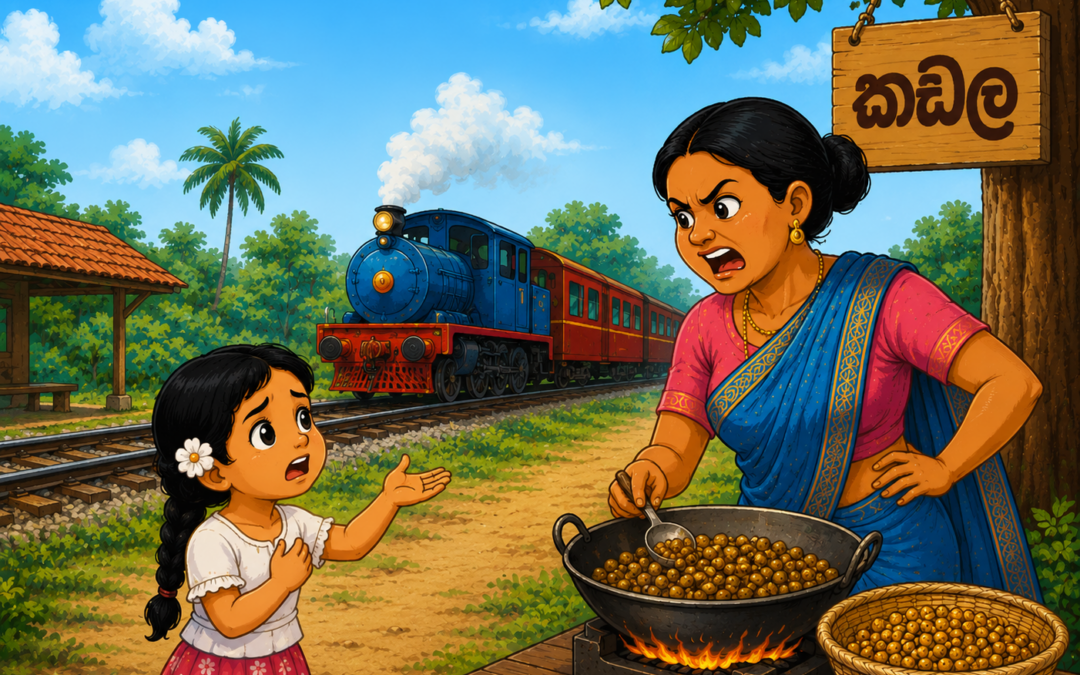
As I walk along the railway track,
Someone is roasting peanuts nearby.
When I ask for a handful of peanuts,
The Tamil girl smiles and teases playfully
This lively raban padaya captures a cheerful and humorous moment from everyday village life in Sri Lanka. Set beside a railway track, the verse paints a simple yet vibrant scene where the aroma of freshly roasted peanuts fills the air, creating a warm and familiar atmosphere.
The playful interaction in the song reflects the lighthearted nature of traditional folk culture. When the traveler asks for a few peanuts, the response comes not with anger, but with teasing charm and laughter. Such expressions are common in Sri Lankan folk performances, where humor, rhythm, and social interaction blend together to entertain audiences.
The rhythmic chanting style of the raban padaya is designed to match the beat of the traditional raban drum, creating an energetic performance that encourages singing, dancing, and audience participation. These folk verses are often performed during cultural festivals, Sinhala and Tamil New Year celebrations, and community gatherings, preserving the spirit of unity and joy among people.
This verse beautifully represents how ordinary moments from daily life can become memorable cultural expressions through music, rhythm, and storytelling.
Tambourine Terms (Raban Pada)
On the tall, tall trees,
Long, long leafy branches sway.
Leaves cut from the kenda tree,
Leaves growing around the trunk.
“There are twenty leaves!” they say,
“Yes, twenty leaves indeed!”
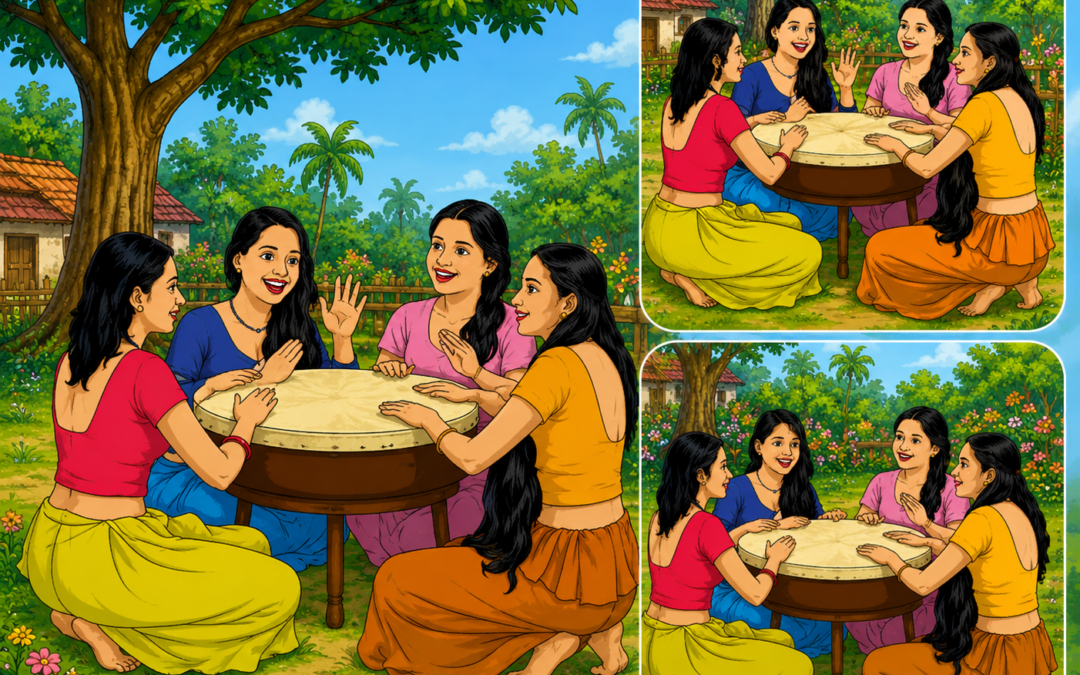
This Raban Padaya is a traditional Sinhala folk rhyme sung during village gatherings and festive occasions in Sri Lanka. These playful verses are often performed while playing the Raban, a traditional circular drum used especially by women during Sinhala cultural celebrations.
The poem describes the beauty of nature using simple and rhythmic language. Tall trees, long leaves, and village surroundings create a peaceful countryside image. The repeated words and cheerful rhythm make the rhyme enjoyable for children and adults alike.
The line about “twenty leaves” adds a playful counting element, which is common in Sinhala folk poetry. Such verses were traditionally used not only for entertainment but also for teaching rhythm, memory, observation of nature, and language skills.
Raban songs are usually performed during the Sinhala and Tamil New Year season. Families and neighbors gather together, sing folk songs, play drums, dance, and celebrate village traditions. These poems help preserve the cultural heritage of Sri Lanka and pass traditional values from one generation to another.
The simple words, repetition, and musical flow make this Padaya lively and easy to remember. Even today, children learn and perform these folk rhymes in schools, cultural programs, and New Year festivals.
Tambourine Terms (Raban Pada)
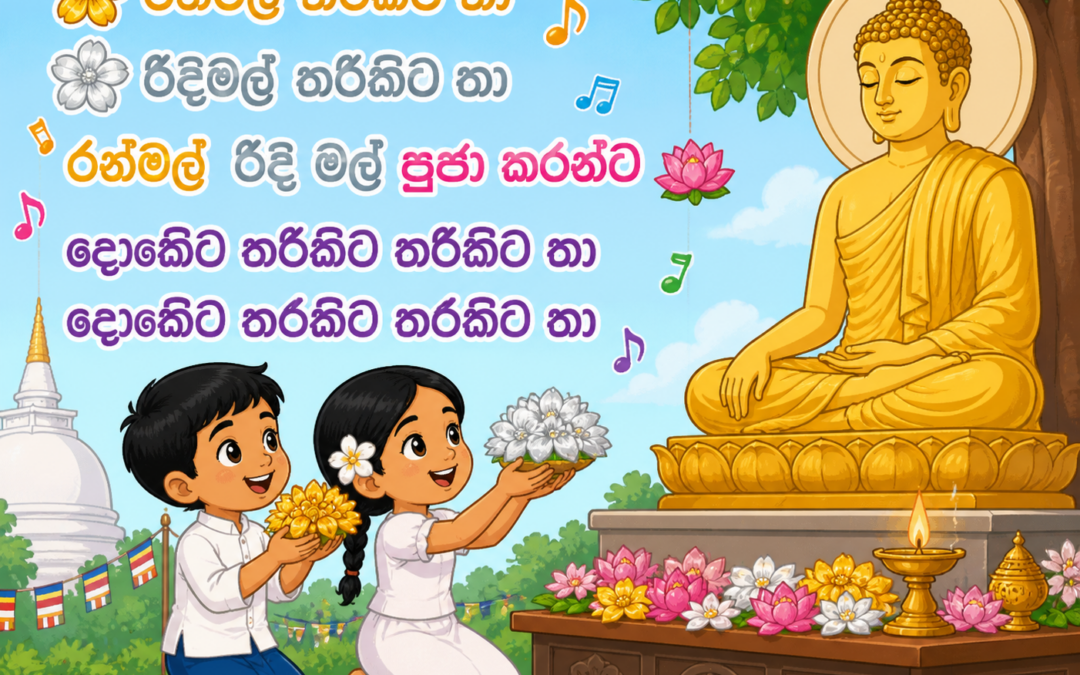
Ranmal tarikita tha
Ridimal tarikita tha
Offering golden and silver flowers in devotion
Donkita tarikita tarikita tha
Donkita tarikita tarikita tha
This traditional raban padaya (Ranmal tarikita tha raban padaya) reflects the rhythmic beauty and cultural richness of Sri Lankan folk heritage. The phrases “Ranmal” (golden flowers) and “Ridimal” (silver flowers) symbolize purity, prosperity, and devotion. The act of offering these flowers represents a heartfelt tribute, often linked to spiritual or festive occasions.
The repeated rhythmic sounds like “tarikita tha” and “donkita tarikita” are not literal words, but expressive beats that mimic the drumming patterns played on the raban, a traditional Sri Lankan percussion instrument. These sounds bring energy, movement, and a sense of celebration, making the performance both musical and poetic.
Traditionally performed during festivals, New Year celebrations, and cultural gatherings, raban padaya is more than just a song—it is a communal experience. Groups gather around the raban, singing in unison while maintaining rhythmic harmony through hand-drumming. This creates a lively atmosphere filled with joy, unity, and cultural pride.
By blending symbolic imagery with rhythmic expression, this piece captures the essence of Sri Lanka’s folk traditions—where music, devotion, and community come together in a vibrant cultural expression.
View Ranmal tarikita tha raban padaya Snnhala version.

Recent Comments